Flight School
In September 1966, Jean and I left Fort Bragg with our new son in a new maroon 1966 Chevy Malibu, and headed to Fort Wolters, Texas.
My assignment to Fort Wolters was considered a temporary duty (TD) assignment which meant we were not authorized to take our dependents with us. There would be no housing authorized for us, we were on our own.
Army flight school in 1966 included two different tracks to train pilots. One was the Warrant Officer flight training and the other was the Commissioned Officer flight training. More than 70% of all Army pilots were Warrant Officers with most of them entering the Warrant Officer Candidate program right out of high school. It was a grueling program for them. Not only did they have to attend the same academic and flight classes the commissioned officers did, they also were being pushed with daily physical training, barracks inspections and very little time off. The cadre often harassed the warrant officer candidates trying to "break" the weak ones and wash them out of the program. It was an intensely challenging program, and only the best of them made it through.
The commissioned officers only had to worry about their academic and flight classes. Once their training day was over, they could leave the post and not have to report back until the next day. Like my fellow commissioned officers, being a pilot was considered an additional specialty, not our primary military occupational specialty or MOS. As an Infantry Officer, I had to maintain proficiency first in my primary MOS and secondly my additional MOSs such as being a pilot.
The need for commissioned officers as pilots was to provide leaders and commanders for the growing number of aviation units. Throughout my Army career this often presented a dilemma for me regarding which assignments I would get to maintain proficiency as both an Infantry Officer and a pilot. This did not change until I was a Lieutenant Colonel in my eighteenth year of service when the Army reestablished an Army Aviation Branch, and I was selected to be among the first to be in that branch.
At that time, Fort Wolters was one of the largest flight training bases in the world. Mineral Wells Texas, the town adjacent to the base, was little more than a dilapidated, little southern town full of dirt and dust. In the past, it was known for its mineral baths and a large, decrepit hotel in the middle of town called the Baker Hotel. The town was profiting big time from the influx of Army soldiers going to school there. They were renting anything from chicken coops to absolute shacks. The townspeople knew we had no choice and that we would take whatever we could get. Our search for a place to rent was complicated by the fact that we had a baby. Few of the other officers had children with them.
One of the "apartments" we looked at was nothing more than a chicken coop. The lady who owned it expected us to rent it as a "furnished" apartment. The only thing on the bed was a metal box spring and the entire apartment was incredibly dirty. When we declined to rent it, she was quite upset that we did not like what she was trying to sell us.
After some horrible experiences looking at temporary living spaces we would need for the four months we would spend there, we finally found a roach-infested "furnished" apartment we paid too much for, but it was all that was available. Jean was appalled by the conditions, but she showed her mettle and made it work for us.
The apartment had a very old cooling system that was basically an evaporator. When it was on, it would blow air over an evaporator which helped cool the air. Often the old unit would mix in water with the air and it would blow air and water into the room. I called it a giant mud slinger.
In the winter months, the only source of heat was open flame small gas heaters that were very dangerous for a small baby crawling around on the floor. One time John touched one of the heaters and slightly burned his hand, and he never touched them again.
One night, Jean got up and turned on the light in the kitchen; and, to her horror, there were literally hundreds of cockroaches scurrying. After emptying a can of Raid on the bugs, she was able to go back to bed. We tried not to turn on the light in the kitchen at night.
People told us that bugs were just part of living in the South. Jean took it all in stride, even when she noticed Johnny chewing on something and, when she fished it out of his mouth, she could see it was a dead hornet.
We had a couple living in the apartment below us. They owned a motorcycle and would roar off at all times of the day and night. The apartments had paper thin walls which made privacy with spoken words very sketchy. Many nights we listened to the couple below us engage in very loud sex. We were glad that John was too young to know what was going on.
October 10th 1966 was my first day at the flight line. As I sat at the briefing table with my fellow student, my very young civilian instructor, O. A. Swengel, asked who wanted to be first for the orientation flight. Each instructor pilot (IP) was assigned two students. The other student with me, 24-year-old Second Lt. John T. Lyons, hesitated, and I said I would like to go first.
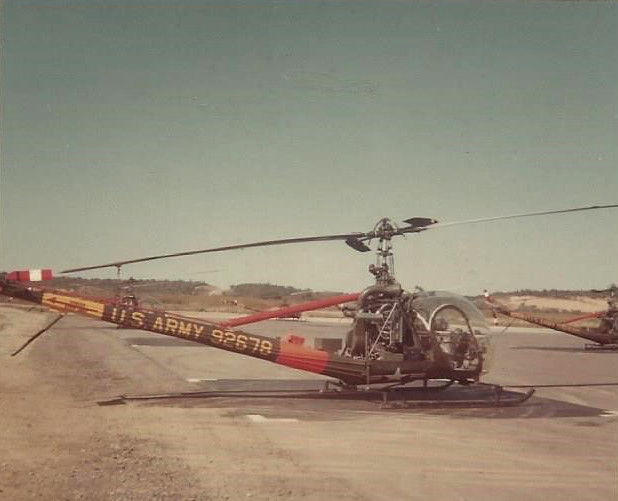
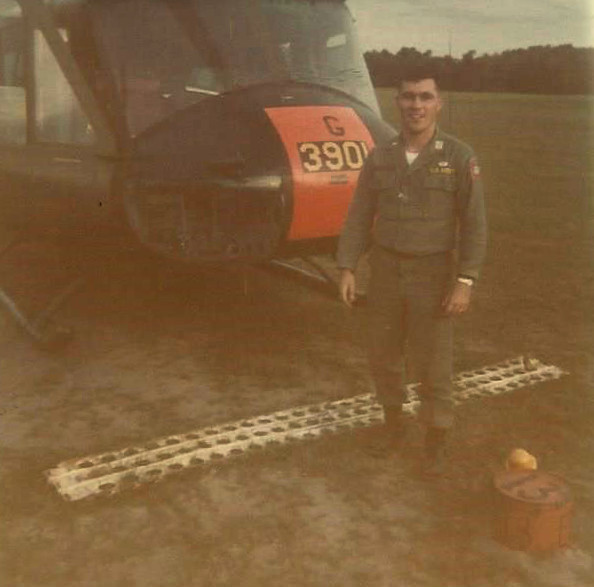
It was a beautiful fall day with blue sky and warm temperatures. The helicopter we were flying was a Hiller OH-23 D. We had the doors off, and I remember being absolutely thrilled by the experience. It truly was flying like a bird. We flew near the Brazos River, sometimes low level, which was about 10 miles west of Mineral Wells. The instructor let me put my hands on the controls briefly to get a sense of what it was like. Wow!
When we returned John Lyons got in and took off presumably on the same route I had flown earlier. John was already a licensed fix wing pilot with some flight experience. Not long after they departed, there was some commotion among the instructor pilots as news came in that there had been an accident. No one was telling us what happened, but it soon became known that my instructor and John Lyons had crashed and were killed. Apparently, they struck a tree beside the river and were killed instantly. At first, no one knew if there were fatalities, but the word soon spread that the student and IP had both been killed. It was very quiet in the briefing room as we all absorbed the news.
In the civilian community, especially among the wives, the news was getting out but no one was giving the names of who was involved in the crash.
The Army's need to notify the next of kin prevented our wives from finding out who had been killed until we finally got home that night, about 11 p.m. This was a very sobering experience for all of us. We now had the awareness of the dangers we were facing. Jean and I talked well into the night about our future and whether I should continue in the flight program. We both prayed about it and decided that I would continue my flight training. To Jean's credit she supported me one hundred percent in the decision to continue flying. After that incident, several students dropped out.
I showed up the next day for training and, after meeting my new instructor, Mr. Vaughn, an older civilian instructor pilot, along with a new student, I was back in the air to complete my training.
The first of the major hurtles we all faced flying was to be able to complete our first solo flight. For most of us, that was about eight hours into the program. Some of the pilots never could learn to hover the helicopter, so they were washed out of the class. I remember the feeling when the IP stepped out of the helicopter and cleared me to fly solo. It was a moment I will never forget. Once I did that, I was confident I would complete my training and become a helicopter pilot.
When a student pilot first soloed there was a tradition that he would be thrown into a swimming pool at one of the nearby motels. I was happy to have my turn.
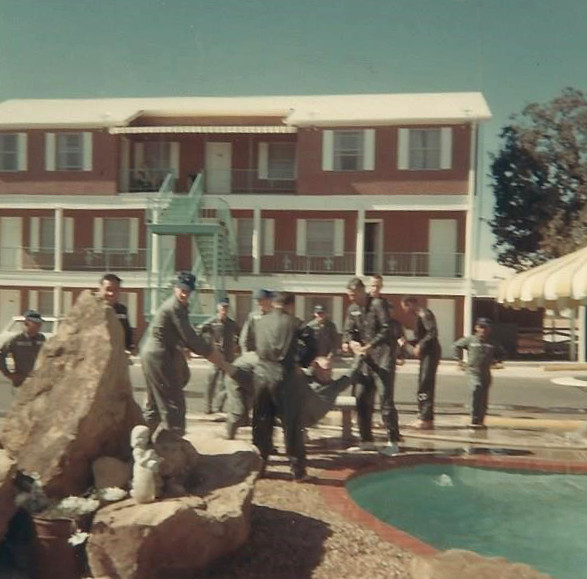
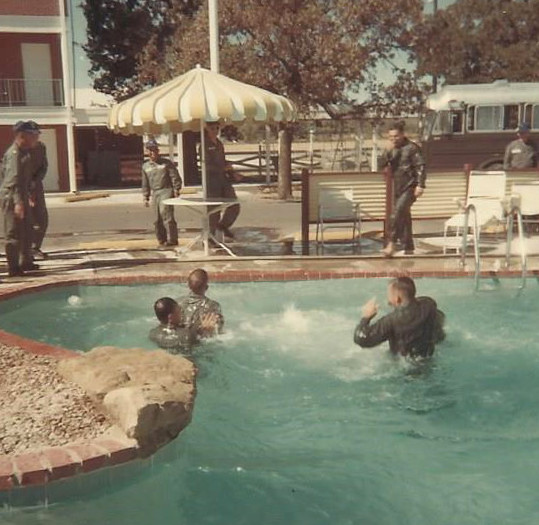
Our training was intense with half the day on the flight line and half the day in academic classes. We learned how helicopters flew and all the mechanical, electrical, and electronic systems of the aircraft as well as classes on navigation and meteorology and many other subject areas I have since forgotten. I truly enjoyed learning how things work.
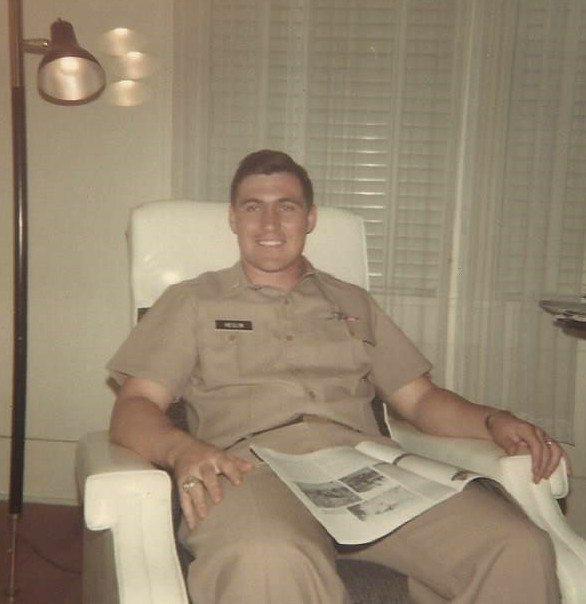
One of the best IP's I had at Fort Wolters was Maj. Marsh who taught me how to fly into confined spaces and very small landing zones (LZs).
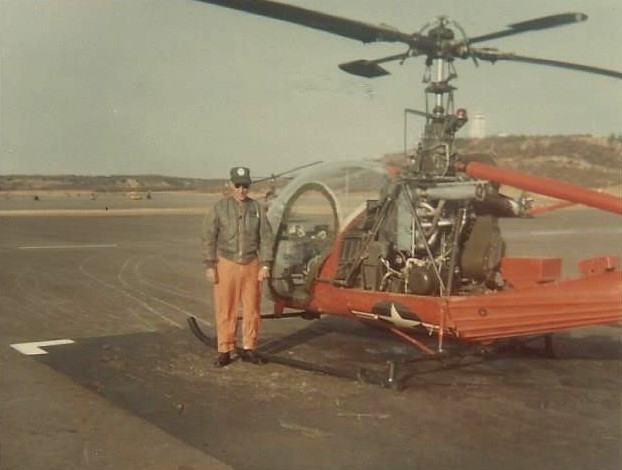
At Fort Wolters Jean and I met some wonderful young couples, and we became long time friends. Some of them remain friends of ours to this day, and we exchange Christmas cards each year. Sometimes, on weekends, we would all go out to the Army recreation area at Possum Kingdom Lake which was about 30 miles from Fort Wolters.
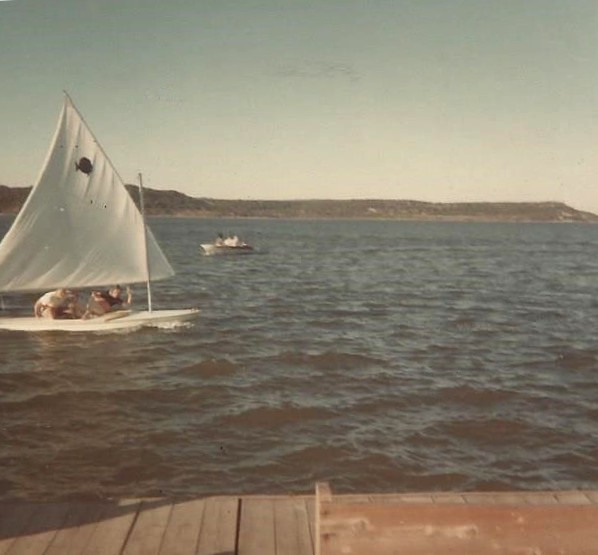
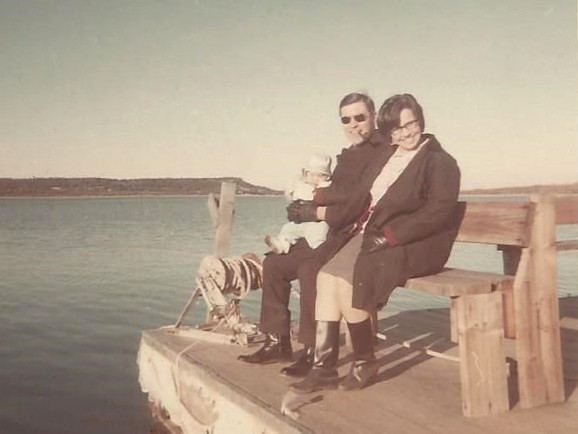
Among them was Dan and Joni Baker from California. Dan and Joni did not have any children, and they rented a small apartment in the Baker Hotel in the middle of Mineral Wells. At one time the hotel was best known for the mineral baths they offered. When we were there, it was pretty much a dying hotel.
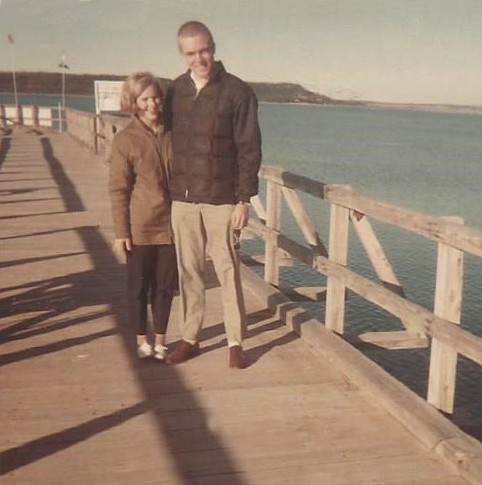
We really enjoyed Dan and Joni and would spend most of our weekends visiting with them often until the early morning hours. They taught us how to play the card game Bridge.
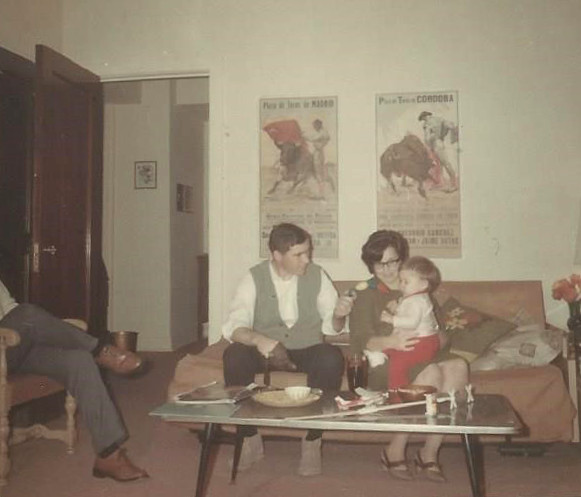
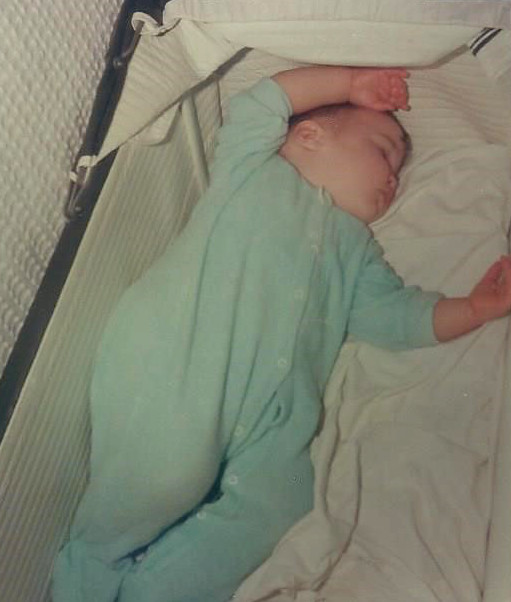
As we talked, laughed, and ate snacks through the night playing Bridge, Johnny would be sleeping in his little bassinet. Sometimes he would wake up, look around and then just go back to sleep. He was such a good kid.
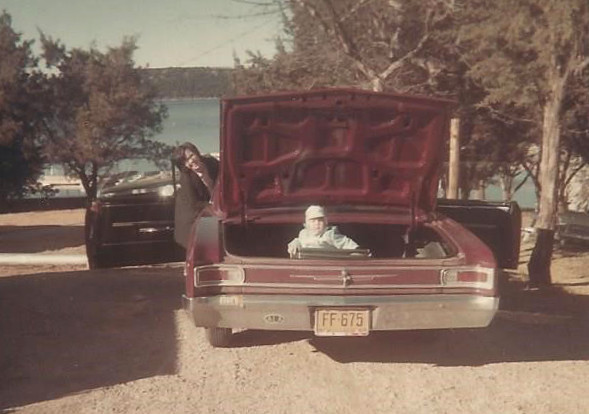
Going to Possum Kingdom Lake was a welcome break for all of us from the stress of flight school and the knowledge that when we finished our training, we would most likely be going to Vietnam.
While at Fort Wolters, Jean and I got involved with sponsoring a foreign student. Our foreign flight school student was a Malaysian Officer named Mammoud.
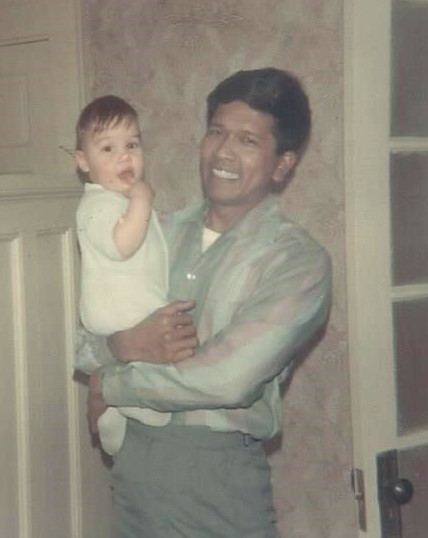
Several years after flight school we heard that Mammoud was killed in a helicopter accident in Malaysia.
We celebrated Christmas in our little apartment. I asked Jean to not invite her parents down because I was so embarrassed with the poor conditions we were living in. No one came to visit us in Texas.
After Fort Wolters, we went to Fort Rucker in Enterprise, Ala., for the final phase of training. We flew the new UH-1 helicopters.
After looking at several places to live, we settled on renting a house in Enterprise Alabama. It was a small house, which was not airconditioned. It was about 3 miles from the base at Fort Rucker. Jean was well along in her pregnancy with Joannie, and the heat of AL in the small house was difficult for her. We had nice neighbors, Barbara and Ted Temple and their son Jerry.
While in that house, Jean's sister Carol visited along with two of her children, Joey and Dave, who were both still babies. It was hot and crowded, but Jean managed a smile through it all.
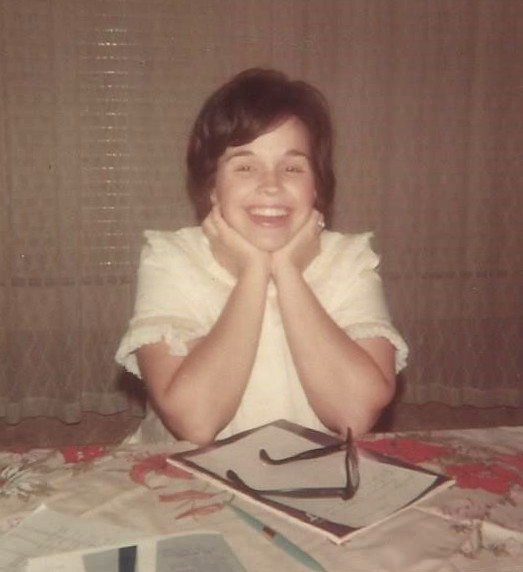
The flight training was challenging and exhilarating as we pressed the envelope of our skills and mental abilities. We did instrument training, tactical flight training and cross-country navigation. All along the way, we had to pass flight tests with our instructor pilots and a wide range of academic tests. Failure was not an option. If you failed a flight check ride and got a "pink slip," you had one more chance to succeed. If you failed again, you were either washed out of the program or recycled to the next class. These were very stressful times. The training was tough, and life with a new baby in a small house without air-conditioning in the summer heat of Alabama was difficult for both Jean and me.
All of us knew that when we graduated, we would be deployed to Vietnam. Jean and I made close friends during those flight school days, and several of those friendships have lasted more than 50 years now.
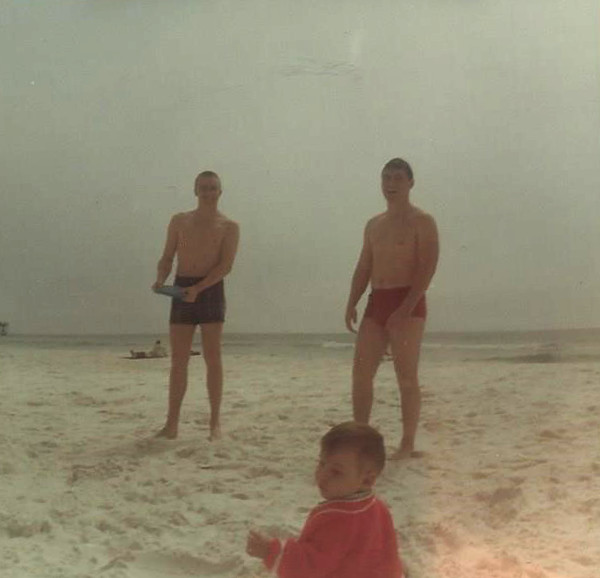
We were not far from the Gulf coast and, on a couple of occasions, we went to the beach on the weekend with friends. It was our first time to see the Gulf, and we remember it fondly to this day.
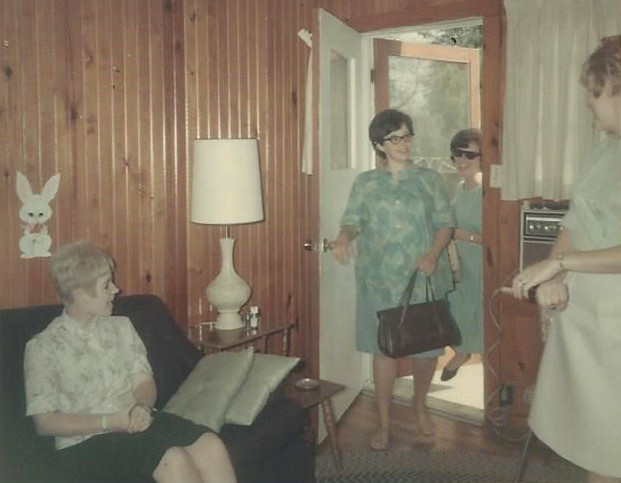
Some of our friends had a baby shower for Jean. It was a surprise for her. It was a very nice event for Jean with many memories.
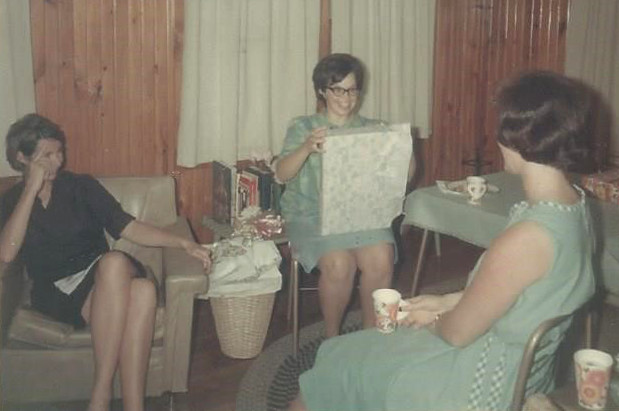
While we were at Fort Rucker, Jean gave birth to our second child, Joan, on May 4, 1967.
As graduation approached, there was a formal farewell party for the class. We all knew that we would be going to Vietnam after graduation and that put a bit of a sobering note on the festivities. Some of those at that party would soon die in Vietnam.
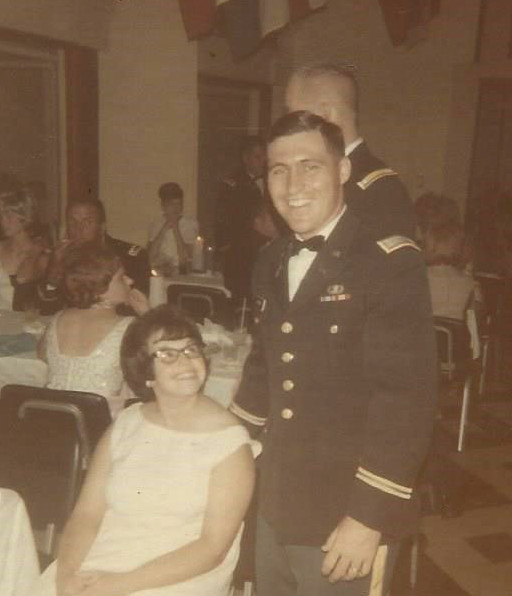
On graduation day the wives joined us at the flight line, and we all promised to stay in touch.
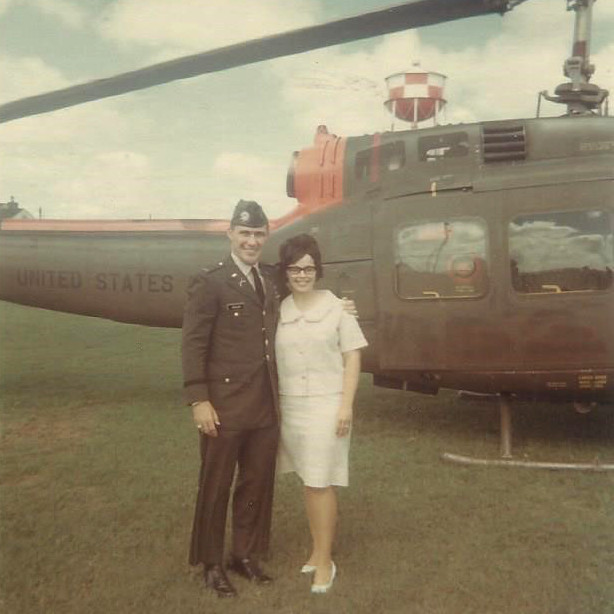
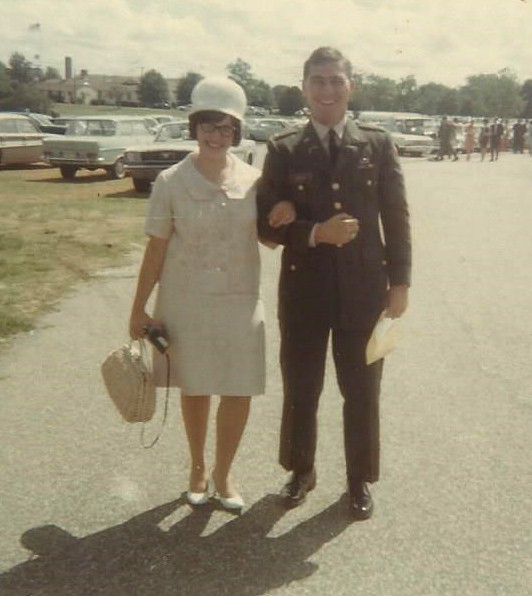
Upon graduation, I was assigned back to Fort Bragg to be part of a new assault helicopter company (AHC) forming up to go to Vietnam in the fall of 1967. The 57th AHC was top-heavy with rank, as many longtime fixed-wing aviators had transitioned to helicopters and were filling the new units deploying. As a result, as a first lieutenant, I was just a pilot in a platoon with no responsibilities other than to fly an aircraft. All the leadership positions were filled with senior captains and majors.
Afterwards, I brought Jean back to Rhode Island with our son and new daughter, and put them all in a rental house on Vine Street in Pawtucket near Jean's parents. I returned to Fort Bragg and re-joined the unit as we flew our fleet of helicopters cross-country to Sharp Army Depot near San Francisco. It was an amazing trip with several overnight stops along the way. My flight records indicate that the flight took place from Sept. 3-8, and that I flew a total of 25.3 hours.